

Heart Attack Symptoms - Warning Signs in Men and Women
Recognize heart attack symptoms early. Learn key warning signs in men and women, atypical presentations in diabetes, and when to seek emergency care.
Recognizing heart attack symptoms early will allow you to seek medical attention immediately.
Chest Discomfort Is a Major Warning Sign: Pressure, tightness, squeezing, or discomfort in the center of the chest that spreads to the arm, neck, jaw, or back requires immediate attention.
Watch for Additional Symptoms: Shortness of breath, cold sweating, nausea, and sudden weakness can accompany heart-related emergencies.
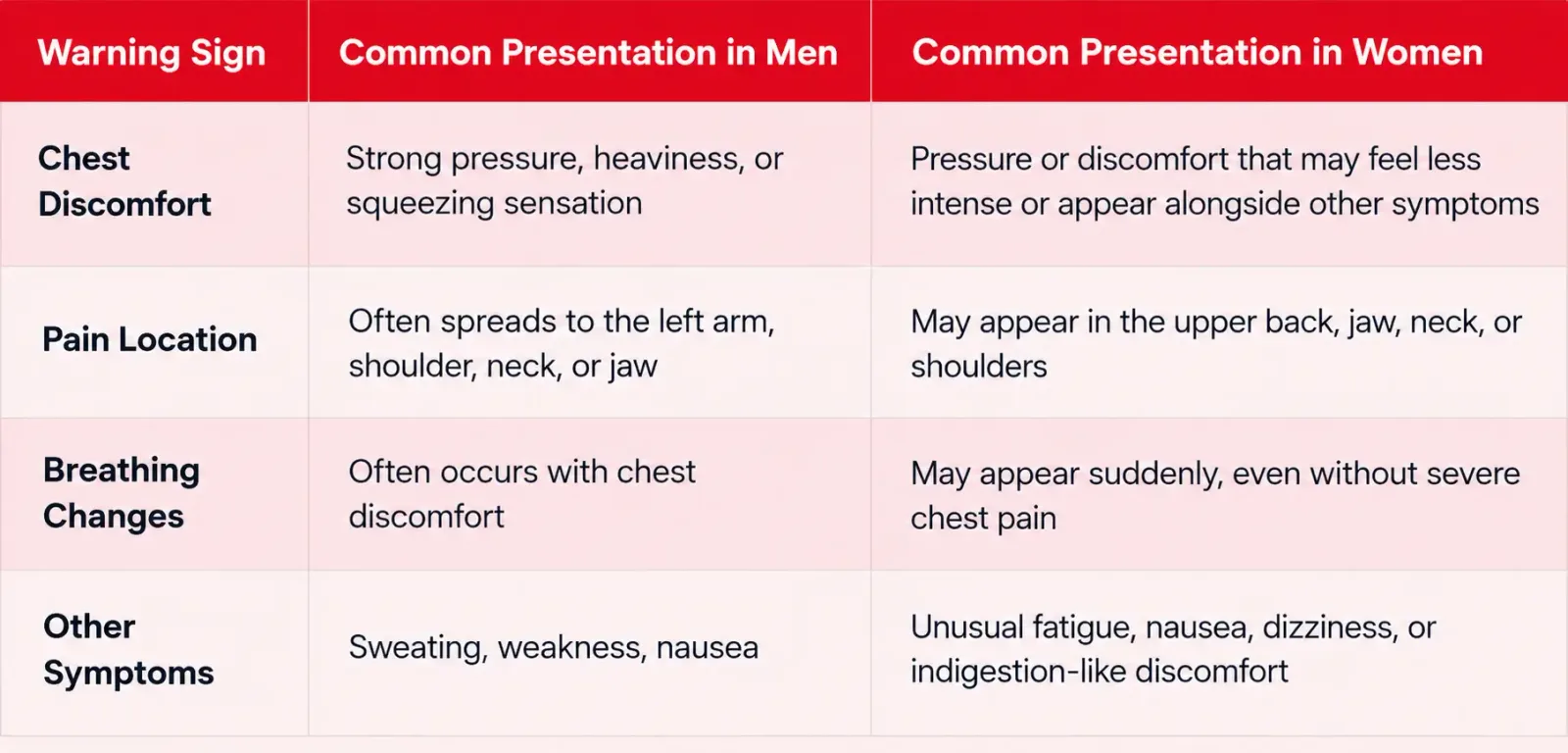
Symptoms Can Differ Between People: Men often experience noticeable chest pressure, while women and people with diabetes may have less typical signs such as unusual fatigue, lightheadedness, or upper abdominal discomfort.
Do Not Ignore Sudden Changes: New or unexplained symptoms should be evaluated quickly, especially in people with existing heart risk factors.
CRITICAL MEDICAL ALERT: If you or a family member are experiencing sudden chest tightness, crushing pressure, unexplained breathlessness, cold sweats, or discomfort spreading to your jaw or arm, stop reading and seek urgent help immediately. Proceed directly to the nearest 24/7 Emergency center. Never attempt to drive yourself to the hospital, and do not wait to see if the sensations pass on their own.
Sudden chest discomfort can leave you wondering whether it is something minor or a warning sign that needs immediate attention. Many people wait for symptoms to become severe, especially when the discomfort feels like indigestion, fatigue, or muscle strain.
Recognizing heart attack symptoms early allows you to seek medical care before a serious cardiac event becomes harder to manage. While chest pressure or tightness remains a common warning sign, some people experience less obvious symptoms such as:
Unusual tiredness
Nausea
Breathlessness
Discomfort in the jaw, back, or upper abdomen.
Heart-related emergencies require quick action because the heart muscle depends on a continuous supply of oxygen-rich blood. In this article, we’ll discuss the common warning signs of a heart attack, how symptoms can differ between individuals, and when chest discomfort requires immediate Emergency Care.
What Are the Common Heart Attack Symptoms to Watch For?
A heart attack does not always begin with a dramatic collapse. In many cases, the body sends warning signals that people ignore because they resemble common problems such as acidity, tiredness, or muscle discomfort.
Recognizing heart attack symptoms early allows you to seek medical care before the condition becomes more serious. Common warning signs include:
Chest Pressure or Tightness:
Many people describe heart-related chest discomfort as pressure, heaviness, squeezing, or a feeling of tightness in the center of the chest. The sensation may last several minutes and does not always improve with rest or changing position.
Pain Spreading Beyond the Chest:
Discomfort may move from the chest toward the left arm, shoulder, neck, jaw, or upper back. Pain that spreads beyond the chest should always be taken seriously.
Sudden Sweating or Weakness:
Cold sweating, unusual weakness, or feeling lightheaded without an obvious reason can accompany a heart attack.
Shortness of Breath:
Difficulty breathing, especially when resting or alongside chest discomfort, requires urgent medical attention.
Nausea or Dizziness:
Some people experience nausea, vomiting, dizziness, or a feeling that something is seriously wrong before or during a cardiac event.
If these symptoms appear suddenly, especially together, seek immediate medical care through Emergency Care.
How Heart Attack Symptoms Can Differ Between Men and Women
Heart attacks can affect men and women differently. While chest discomfort remains a common warning sign for both, some people experience less obvious symptoms.
Why Women Should Pay Attention to Less Obvious Warning Signs
Many people associate heart attacks with severe chest pain, but women may experience symptoms that are easier to dismiss. Unusual tiredness, back or jaw discomfort, nausea, and breathlessness can sometimes be the first signs of a serious heart problem.
A woman who suddenly feels exhausted during normal activities, experiences unexplained breathlessness, or develops unusual upper body discomfort should not ignore these changes.
Symptoms that feel like indigestion or acidity deserve attention when they appear alongside warning signs such as sweating, dizziness, or breathing difficulty. Getting medical advice early allows doctors to identify the cause and provide appropriate care.
Why Diabetes Can Make Heart Attack Symptoms Harder to Recognize
People living with Diabetes face a higher risk of heart-related complications. Over time, diabetes can affect the nerves that carry warning signals from different parts of the body, which means some individuals may not feel typical chest pain during a cardiac event.
Family members should pay attention to unusual changes, including:
Sudden breathlessness without a clear reason.
Cold sweating, dizziness, or sudden weakness.
Unexpected confusion or extreme tiredness.
Physical changes that seem unusual for the person’s normal routine.
Any sudden decline in a person managing diabetes requires medical evaluation rather than waiting for symptoms to improve on their own.
Understanding the Difference Between Heart Attack, Angina, and Acid Reflux
Chest discomfort can have different causes, but certain patterns require urgent attention.
Angina:
Usually occurs when the heart does not receive enough blood during physical activity or stress. People often experience a familiar pattern of discomfort that improves with rest or prescribed medication.
Heart Attack:
Often causes new or worsening discomfort that lasts longer, may occur even at rest, and does not improve with simple measures.
Acid Reflux:
Burning sensations caused by reflux often relate to meals or lying down, but symptoms like sweating, breathlessness, or pain spreading to the arm and jaw require medical assessment.
Many people first assume sudden chest discomfort is caused by gas or indigestion. While digestive issues are common, symptoms such as chest pressure, sweating, nausea, and breathing difficulty should never be ignored. Seeking emergency care quickly allows doctors to determine the cause and provide the right treatment.
Why You Should Never Wait During a Suspected Heart Attack
When a heart attack begins, every minute becomes crucial. A blocked artery reduces the oxygen supply reaching the heart muscle, and delaying treatment increases the risk of serious damage.
Many people wait to see if chest discomfort improves or assume the symptoms will pass with rest. That decision can become dangerous because heart attacks can worsen quickly and lead to life-threatening complications.
Driving yourself to the hospital during a suspected cardiac emergency also creates unnecessary risk. Severe chest pain, dizziness, weakness, or a sudden drop in blood pressure can affect your ability to drive safely.
The safest option is to call for emergency assistance or ask someone else to take you for immediate medical evaluation. Ambulance teams can provide initial support during transport and allow healthcare professionals to begin assessing the situation before arrival.
What Happens When You Reach the Hospital During a Cardiac Emergency?
When you arrive with possible heart attack symptoms, medical teams begin assessment immediately. The first priority is understanding what is happening and starting treatment as quickly as possible. Doctors and emergency staff may perform:
Electrocardiogram (ECG):
An ECG records the heart’s electrical activity and helps doctors identify signs of a heart attack.
Blood Tests:
Tests such as cardiac troponin help detect whether heart muscle has been damaged.
Continuous Monitoring:
Heart rate, blood pressure, and oxygen levels are monitored while doctors determine the next steps.
Emergency Treatment:
Depending on the findings, patients may receive medicines or procedures to restore blood flow to the heart.
Quick evaluation allows doctors to choose the right treatment based on the patient’s condition rather than waiting for symptoms to become more severe.
Emergency Cardiac Care at The Modern Hospital
Facing a possible heart attack is a frightening experience for patients and families. During such moments, having access to timely medical support and experienced healthcare teams makes a meaningful difference.
At The Modern Hospital, emergency teams assess cardiac concerns quickly and coordinate care with specialists to support patients during urgent situations. Diagnostic services such as ECG, Echo, and Doppler provide doctors with important information about heart function when evaluating cardiac conditions.
When symptoms require immediate attention, Emergency Care provides urgent assessment and medical support for patients experiencing serious health concerns.
Cardiac emergencies require teamwork between emergency physicians, nurses, diagnostic teams, and specialists. Coordinated care allows families to receive timely guidance while doctors focus on stabilizing the patient and planning the next steps.
Acting Quickly When Heart Attack Symptoms Appear
Recognizing heart attack symptoms gives you the ability to make faster decisions when every moment matters. Chest pressure, unusual breathlessness, cold sweating, nausea, and discomfort in the arm, jaw, or back should always be taken seriously.
If symptoms appear suddenly, avoid waiting for them to disappear on their own. Seeking emergency medical care quickly allows doctors to identify the cause, begin treatment, and provide the support needed during a critical situation.
The Modern Hospital’s emergency and cardiac care teams remain available to support patients and families when urgent medical attention is needed.
Frequently Asked Questions
Can a heart attack cause pain only in the jaw or back?
Yes, some people experience heart-related discomfort in areas such as the jaw, neck, shoulders, or upper back instead of obvious chest pain. Women, older adults, and people living with diabetes may experience these less typical warning signs, which is why unusual discomfort should not be ignored.
How can you tell the difference between anxiety symptoms and a heart attack?
Anxiety and heart problems can share symptoms such as chest discomfort, shortness of breath, and a fast heartbeat. However, symptoms like chest pressure spreading to the arm or jaw, cold sweating, sudden weakness, or discomfort that feels unusual require medical evaluation to rule out a heart-related emergency.
What should you do if someone collapses with suspected heart attack symptoms?
If someone becomes unconscious and is not breathing normally, call emergency services immediately and begin CPR if you are trained to do so. Early chest compressions help maintain blood flow until emergency medical teams arrive.
Can taking aspirin at home treat a heart attack?
Aspirin may be used in some emergency situations to reduce clot formation, but it does not remove a blocked artery or replace medical treatment. Seeking emergency care should remain the priority when heart attack symptoms appear.